Showing posts with label Proust. Show all posts

Wednesday, April 23, 2008

Six Images In Search Of An Exhibition X

Tales of the Quotidian Sublime


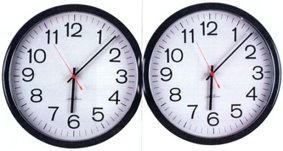
Felix Gonzalez-Torres (1957-1996) - Untitled (Perfect Lovers), 1991


James Turrell (b. 1943) - A Frontal Passage, 1994


Thomas Demand (b. 1964) - Room (Zimmer), 1996


Andreas Gursky (b. 1955) - Times Square, New York, 1997


Rachel Whiteread (b. 1963) - Untitled (Paperbacks), 1997


Matthew Barney (b. 1967) - The Cabinet of Baby Fay La Foe, 2000


'The only real voyage of discovery consists not in seeking new landscapes but in having new eyes.'

Marcel Proust

Wednesday, April 09, 2008

Six Images In Search Of An Exhibition IX


Midas In Vienna: Gustav Klimt (1862-1918)


Music, 1895


Pallas Athene, 1898


Portrait of Adele Bloch-Bauer, 1907


Hope, 1907


Water Serpents II, c. 1907


Tree of Life, 1909


'It is not possible that a piece of sculpture, a piece of music which gives us an emotion which we feel to be more exalted, more pure, more true, does not correspond to some definite spiritual reality.'

Marcel Proust

Something Old, Something New I


Ruins: The Abandoned Architecture Of Our Timescapes

Exhibit A:


Jean-Baptiste Camille Corot (1796 – 1875), The Coliseum seen through Arches of the Basilica of Constantine, 1825


Exhibit B:


Mark Rothko (1903-1970) - Entrance to Subway, 1938


'Since railways came into existence, the necessity of not missing the train has taught us to take account of minutes whereas among the ancient Romans, who not only had a more cursory science of astronomy but led less hurried lives, the notion not of minutes but even of fixed hours barely existed.'

Marcel Proust

Tuesday, April 08, 2008

TIme Is Never Lost, Only Forgotten


William Blake (1757-1827) - Oberon, Titania and Puck with Fairies Dancing, c. 1786


'Those who have created for themselves an enveloping inner life, pay little heed to the importance of current events. What alters profoundly the course of their thinking is much more something which seems to be of no importance in itself and yet which reverses the order of time for them, making them live over again an earlier period of their life. The song of a bird in the park of Montboissier, a breeze laden with the scent of mignonette, are obviously incidents of less importance than the outstanding dates of the Revolution and the Empire. Yet they inspired Chateaubriand in his Mémoires d'Outre-tombe to write pages of an infinitely greater value.'

Marcel Proust

Thursday, April 03, 2008

Spare And Sentimental Geometries Of Feeling


Casper David Friedrich (1774-1840) - On the Sailing Boat, 1818-19


'Love is space and time measured by the heart.'

Marcel Proust

Monday, July 23, 2007

A View Of The Biggest Room Of All


Claude Monet - Le Bassin d'Argenteuil, 1872


'A change in the weather is sufficient to recreate the world and ourselves.'

Marcel Proust

Tuesday, April 10, 2007

The Gift Of Banishment


Michelangelo di Lodovico Buonarotti Simoni (1475-1564) - The Fall and The Expulsion from the Garden of Eden, 1509-10


'The only paradise is paradise lost.'

Marcel Proust

Tuesday, January 30, 2007

Illuminating Manuscripts


Marcel Proust (1871-1922) - Carnet de notes (Notebooks), 1908-18


"Our passions shape our books; repose writes them in the intervals."

Marcel Proust

"I try to leave out the parts that people skip."

Elmore Leonard

"Easy reading is damn hard writing."

Nathaniel Hawthorne

"The difference between the right word and the almost right word is the difference between lightning and a lightning bug."

Mark Twain

"True Ease in Writing comes from Art, not Chance,
As those move easiest who have learn'd to dance."

Alexander Pope

"The two most engaging powers of an author are to be able to make new things familiar and familiar things new."

Samuel Johnson

"The most beautiful things are those that madness prompts and reason writes."

André Gide

"Writing is a way of talking without being interrupted."

Jules Renard

"A writer is someone for whom writing is more difficult than it is for other people."

Thomas Mann

"Don't use words too big for the subject. Don't say 'infinitely' when you mean 'very'; otherwise you'll have no word left when you want to talk about something really infinite."

C. S. Lewis

Thursday, January 04, 2007

Signatures Of The Soul


Jenny Saville (b. 1970) - Reverse, 2003


"The features of our face are hardly more than gestures which have become permanent."

Marcel Proust

"A man's face is his autobiography. A woman's face is her work of fiction."

Oscar Wilde

"You use a glass mirror to see your face. You use works of art to see your soul."

George Bernard Shaw

"Who sees the human face correctly: the photographer, the mirror, or the painter?"

Pablo Picasso

"I have never been aware before how many faces there are. There are quantities of human beings, but there are many more faces, for each person has several."

Rainer Maria Rilke

Wednesday, November 29, 2006

Forgotten Faces


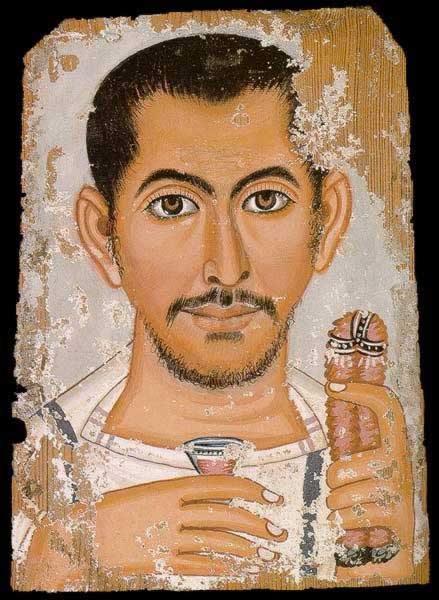
Funerary Portrait Painting of a Man from the Roman Period. (This portrait dates from the third to the fourth centuries AD. The narrow stripes on the man's tunic identify his rank as equestrian, and he holds a glass of red wine and a rose petal wreath.)


"Be absolute for death; either death or life
Shall thereby be the sweeter. Reason thus with life:
If I do lose thee, I do lose a thing
That none but fools would keep: a breath thou art,
Servile to all the skyey influences,
That dost this habitation, where thou keep'st,
Hourly afflict: merely, thou art death's fool;
For him thou labour'st by thy flight to shun
And yet runn'st toward him still. Thou art not noble;
For all the accommodations that thou bear'st
Are nursed by baseness. Thou'rt by no means valiant;
For thou dost fear the soft and tender fork
Of a poor worm. Thy best of rest is sleep,
And that thou oft provokest; yet grossly fear'st
Thy death, which is no more. Thou art not thyself;
For thou exist'st on many a thousand grains
That issue out of dust. Happy thou art not;
For what thou hast not, still thou strivest to get,
And what thou hast, forget'st. Thou art not certain;
For thy complexion shifts to strange effects,
After the moon. If thou art rich, thou'rt poor;
For, like an ass whose back with ingots bows,
Thou bear's thy heavy riches but a journey,
And death unloads thee. Friend hast thou none;
For thine own bowels, which do call thee sire,
The mere effusion of thy proper loins,
Do curse the gout, serpigo, and the rheum,
For ending thee no sooner. Thou hast nor youth nor age,
But, as it were, an after-dinner's sleep,
Dreaming on both; for all thy blessed youth
Becomes as aged, and doth beg the alms
Of palsied eld; and when thou art old and rich,
Thou hast neither heat, affection, limb, nor beauty,
To make thy riches pleasant. What's yet in this
That bears the name of life? Yet in this life
Lie hid moe thousand deaths: yet death we fear,
That makes these odds all even."


Duke Vincentio from Measure for Measure (III, i) by William Shakespeare


"Ay, but to die, and go we know not where;
To lie in cold obstruction and to rot;
This sensible warm motion to become
A kneaded clod; and the delighted spirit
To bathe in fiery floods, or to reside
In thrilling region of thick-ribbed ice;
To be imprison'd in the viewless winds,
And blown with restless violence round about
The pendent world; or to be worse than worst
Of those that lawless and incertain thought
Imagine howling: 'tis too horrible!
The weariest and most loathed worldly life
That age, ache, penury and imprisonment
Can lay on nature is a paradise
To what we fear of death."

Claudio from Measure for Measure (III, i) by William Shakespeare


"Because I could not stop for Death,
He kindly stopped for me.
The Carriage held but just ourselves
And Immortality"

Emily Dickinson


"People do not die for us immediately, but remain bathed in a sort of aura of life which bears no relation to true immortality but through which they continue to occupy our thoughts in the same way as when they were alive. It is as though they were travelling abroad."

Marcel Proust


"For life in the present there is no death. Death is not an event in life. It is not a fact in the world."

Ludwig Wittgenstein


"Life is pleasant. Death is peaceful. It's the transition that's troublesome."

Isaac Asimov


"Most people think life sucks, and then you die. Not me. I beg to differ. I think life sucks, then you get cancer, then your dog dies, your wife leaves you, the cancer goes into remission, you get a new dog, you get remarried, you owe ten million dollars in medical bills but you work hard for thirty five years and you pay it back and then one day you have a massive stroke, your whole right side is paralyzed, you have to limp along the streets and speak out of the left side of your mouth and drool but you go into rehabilitation and regain the power to walk and the power to talk and then one day you step off a curb at Sixty-seventh Street, and BANG you get hit by a city bus and then you die. Maybe."

Denis Leary


"A man's dying is more the survivors' affair than his own."

Thomas Mann


"Men fear death as children fear to go in the dark; and as that natural fear in children is increased with tales, so is the other."

Francis Bacon


"I don't want to achieve immortality through my work. I want to achieve it through not dying."

Woody Allen


Links:

Ancient Faces: Mummy Portraits from Roma Egypt (Metropolitan Museum of Art, New York)

Fayum Portraits Website

Proportion and Personality in Fayum Portraits by A. J. N. W. Prag (PDF)

Monday, November 27, 2006

The Fragile Afterlife Of Images


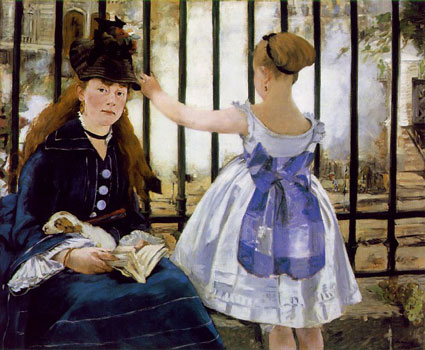
Edouard Manet - Gare Saint-Lazare (1873)


"It is not enough to know your craft - you have to have feeling."

Edouard Manet


"The young man will smile on the canvas for as long as the canvas lasts. Blood throbs under the skin of the woman's face, the wind shakes a branch, a group of men prepare to leave. In a novel or film, the young man will stop smiling, but he will start to smile again when we turn this page or that moment. Art preserves, and it is the only thing in the world that is preserved. It preserves and is preserved itself (quid juris?) , although it actually lasts no longer than its support and materials - stone, canvas, chemical colour, and so on (quid facti?) The young girl maintains the pose that she has had for five thousand years, a gesture that no longer depends on whoever made it. The air still has the turbulence, the gust of wind, and the light that it had that day last year, and it no longer depends on whoever was breathing it that morning. If art preserves it does not do so like industry, by adding a substance to make the thing last. The thing became independent of its "model" from the start, but it is also independent of other possible personae who are themselves artists-things, personae of painting breathing the air of this painting. And it is no less independent of the viewer or hearer, who only experience it after, if they have the strength for it. What about the creator? It is independent of the creator through the self-positing of the created, which is preserved in itself. What is preserved - the thing or the work of art - is a bloc of sensations, that is to say, a compound of percepts and affects.

Percepts are no longer perceptions; they are independent of a state of those who experience them. Affects are no longer feelings or affections; they go beyond the strength of those who undergo them. Sensations, percepts, and affects are beings whose validity lies in themselves and exceeds any lived. They could be said to exits in the absence of man because man, as he is caught in stone, on the canvas, or by words, is himself a compound of percepts and affects. The work of art is a being of sensation and nothing else: it exists in itself."

From What is Philosophy? by Gilles Deleuze and Félix Guatarri


". . . the differences which exist between every one of our real impressions - the differences which explain why a uniform depiction of life cannot bear much resemblance to reality - derive probably from the following cause: the slightest word that we have said, the most insignificant action that we have performed at any one epoch of our life was surrounded by, and coloured by the reflection of, things which logically had no connection with it and which later have been separated from it by our intellect which could make nothing of it for its own rational purposes, things, however, in the midst of which - here the pink reflection of the evening upon the flower-covered wall of a country restaurant, a feeling of hunger, a desire for women, the pleasure of luxury; there the blue volutes of the morning sea and, enveloped in them, phrases of music half emerging like the shoulders of water-nymphs - the simplest act or gesture remains immured as within a thousand vessels, each of them filled with things of a colour, a scent, a temperature that are absolutely different one from another, vessels, moreover, which being disposed over the whole range of our years, during which we have never ceased to change if only in our dreams and thoughts, are situated at the most various moral altitudes and give us sensation of extraordinarily diverse atmospheres."

From Remembrance of Things Past by Marcel Proust

Saturday, October 21, 2006

The Discreet Agony Of Impossible Intimacies: Part One (Synchrophiliacs)


Felix Gonzalez-Torres - Untitled (Perfect Lovers) - (1987-90)


'Desire makes everything blossom; possession makes everything wither and fade.'

Marcel Proust - Les Plaisirs et les Jours (1896)