Monday, October 23, 2006

The Discreet Agony of Impossible Intimacies: Part Three (Haptophobes)


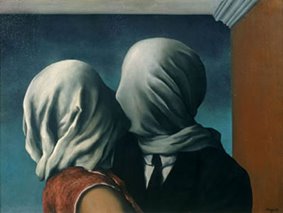
Rene Magritte - The Lovers (1928)


'What does it matter how many lovers you have if none of them gives you the universe?'

Jacques Lacan

Sunday, October 22, 2006

The Discreet Agony Of Impossible Intimacies: Part Two (Cyborganisms)


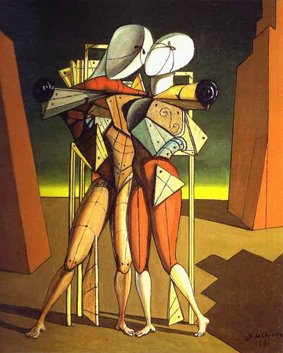
Giorgio de Chirico - Hector and Andromache (1917)


"A cyborg is a cybernetic organism, a hybrid of machine and organism, a creature of social reality as well as a creature of fiction.

Contemporary science fiction is full of cyborgs - creatures simultaneously animal and machine, who populate worlds ambiguously natural and crafted. Modern medicine is also full of cyborgs, of couplings between organism and machine, each conceived as coded devices, in an intimacy and with a power that was not generated in the history of sexuality. Cyborg 'sex' restores some of the lovely replicative baroque of ferns and invertebrates (such nice organic prophylactics against heterosexism). Cyborg replication is uncoupled from organic reproduction...I am making an argument for the cyborg as a fiction mapping our social and bodily reality and as an imaginative resource suggesting some very fruitful couplings.

By the late twentieth century, our time, a mythic time, we are all chimeras, theorized and fabricated hybrids of machine and organism; in short, we are cyborgs. Ths cyborg is our ontology; it gives us our politics. The cyborg is a condensed image of both imagination and material reality, the two joined centres structuring any possibility of historical transformation. In the traditions of 'Western' science and politics - the tradition of racist, male-dominant capitalism; the tradition of progress; the tradition of the appropriation of nature as resource for the productions of culture; the tradition of reproduction of the self from the reflections of the other - the relation between organism and machine has been a border war. The stakes in the border war have been the territories of production, reproduction, and imagination.

The cyborg is a creature in a post-gender world; it has no truck with bisexuality, pre-oedipal symbiosis, unalienated labour, or other seductions to organic wholeness through a final appropriation of all the powers of the parts into a higher unity. In a sense, the cyborg has no origin story in the Western sense - a 'final' irony since the cyborg is also the awful apocalyptic telos of the 'West's' escalating dominations of abstract individuation, an ultimate self untied at last from all dependency, a man in space. An origin story in the 'Western', humanist sense depends on the myth of original unity, fullness, bliss and terror, represented by the phallic mother from whom all humans must separate, the task of individual development and of history, the twin potent myths inscribed most powerfully for us in psychoanalysis and Marxism...The cyborg skips the step of original unity, of identification with nature in the Western sense.

The cyborg is resolutely committed to partiality, irony, intimacy, and perversity. It is oppositional, utopian, and completely without innocence. No longer structured by the polarity of public and private, the cyborg defines a technological polls based partly on a revolution of social relations in the oikos, the household. Nature and culture are reworked; the one can no longer be the resource for appropriation or incorporation by the other. The rela-tionships for forming wholes from parts, including those of polarity and hierarchical domination, are at issue in the cyborg world. Unlike the hopes of Frankenstein's monster, the cyborg does not expect its father to save it through a restoration of the garden; that is, through the fabrication of a heterosexual mate, through its completion in a finished whole, a city and cosmos. The cyborg does not dream of community on the model of the organic family, this time without the oedipal project. The cyborg would not recognize the Garden of Eden; it is not made of mud and cannot dream of returning to dust...Cyborgs are not reverent; they do not re-member the cosmos. They are wary of holism, but needy for connection - they seem to have a natural feel for united front politics, but without the vanguard party. The main trouble with cyborgs, of course, is that they are the illegitimate offspring of militarism and patriarchal capitalism, not to mention state socialism. But illegitimate offspring are often exceedingly unfaithful to their origins. Their fathers, after all, are inessential."

From The Cyborg Manifesto by Donna Haraway


Reading:

Andy Warhol Self-Portraits - (ed.) Dietmar Elger

Andy Warhol - (ed.) Annette Steiner

Art in its Time: Theories and Practices of Modern Aesthetics - Paul Mattick

Cindy Sherman - Rochelle Steiner

The Cult of the Avant-Garde Artist - Donald Kuspit

The Death of the Author - Roland Barthes

Doll Parts: Technology and the Body in 'Ghost in the Shell' - Susan Napier

Magical Girls and Atomic Bomb Sperm: Japanese Animation in America - Annalee Newitz

Making Up People - Ian Hacking

Revisionary Film - Sean Cubitt

The Question of Lay-Analysis - Sigmund Freud

Pop Trickster Fool: Warhol Performs Naivete - Kelly M. Cresap

Truth and Power - (interview with) Michel Foucault

Understanding Foucault - Geoff Danaher, Tony Schirato and Jen Webb

What is an Author? - Michel Foucault

The Work of Andy Warhol - (ed.) Gary Garrels

Would the Real Cindy Sherman Please Stand Up? Encounters between Cindy Sherman and Feminist Art Theory - Michelle Meagher


Viewing:

The Celluloid Closet - d. Rob Epstein and Jeffrey Friedman (1995)

Ghost in the Shell - d. Mamoru Oshii (1995)

Rocco e i suoi fratelli (Rocco and His Brothers) - d. Luchino Visconti (1960)

Tarnation - d. Jonathon Caouette (2003)

Saturday, October 21, 2006

The Discreet Agony Of Impossible Intimacies: Part One (Synchrophiliacs)


Felix Gonzalez-Torres - Untitled (Perfect Lovers) - (1987-90)


'Desire makes everything blossom; possession makes everything wither and fade.'

Marcel Proust - Les Plaisirs et les Jours (1896)

Friday, October 20, 2006

The Cosmic Clock


'There is no doubt but that for us time is at first identical with the continuity of our inner life. What is this continuity? That of a flow or passage, but a self-sufficient flow or passage, the flow not implying a thing that flows, and the passing not presupposing states through which we pass; the thing and the state are only artificially taken snapshots of the transition; and this transition, all that is naturally experienced, is duration itself. It is memory, but not personal memory, external to what it retains, distinct from a past whose preservation it assures; it is memory within change itself, a memory that prolongs the before into the after, keeping them from being mere snapshots and appearing and disappearing in a present ceaselessly reborn. A melody to which we listen with our eyes closed, heeding it alone, comes close to coinciding with this time which is the very fluidity of our inner life; but it still has too many qualities, too much definition, and we must first efface the difference among the sounds, then do away with the distinctive features of the sound itself, retaining of it only the continuation of what precedes into what follows and the uninterrupted transition, multiplicity without divisibility and succession without separation, in order finally to rediscover basic time. Such is immediately perceived duration, without which we would have no idea of time.

How do we pass this inner time to the time of things? We perceive the physical world and this perception appears, rightly or wrongly, to be inside and outside us at one and the same time; in one way, it is a state of consciousness; in another, a surface film of matter in which perceiver and perceived coincide. To each moment of our inner life there thus corresponds a moment of our body and of all environing matter that is 'simultaneous' with it; this matter then seems to participate in our conscious duration. Gradually, we extend this duration to the whole physical world, because we see no reason to limit it to the immediate vicinity of our body. The universe seems to us to form a single whole; and, if the part that is around us endures in our manner, the same must hold, we think, for that part by which it, in turn, is surrounded, and so on indefinitely. Thus is born the idea of a duration of the universe, that is to say, of an impersonal consciousness that is the link among all individual consciousnesses, as between these consciousnesses and the rest of nature.'

From Concerning the Nature of Time by Henri Bergson

Thursday, October 19, 2006

I Am Doll Parts


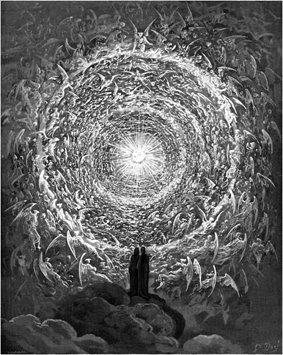
Top: Ghost In The Shell - d. Mamorou Oshii (1995)
Middle: Cindy Sherman - Untitled #253 (1992)
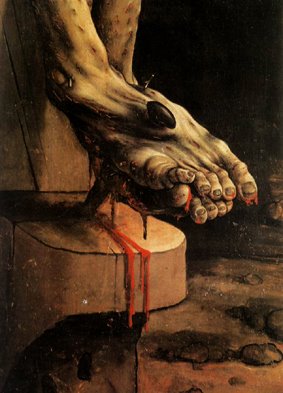
Bottom: Matthais Grunewald - Isenheim Altarpiece (c. 1515)


'The human body is the best picture of the human soul.'

Ludwig Wittgenstein

Wednesday, October 18, 2006

The Immaterial Girl


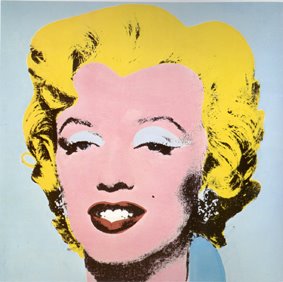
Andy Warhol - Marilyn (1964)


"Searching for Marilyn: the very title suggests not merely that Marilyn Monroe is now gone, but that she was never really there to begin with. Pop mythology has enshrined her as that poor, unfortunate woman stranded between two identities: Norma Jean and Marilyn, the real person and the fabricated Hollywood icon, the flickering candle and the imperishable myth. But the poignancy of Marilyn's story comes from the fact that she was as lost to herself as she would forever be to her idolaters. The modern pop ethos is as suspicious of pristine, innocent origins as it is in awe of transcendent, incandescent stardom. Through telemovies, songs and a flood of biographies both elevated and trashy, we rehearse the primal division of Marilyn from Norma, but we finally believe in the humanity of neither figure; both are mere creations, images. And these images consumed, to the point of death, the individual who fragilely incarnated them.

Marilyn was double, and she was also - even in her lifetime - ceaselessly redoubled. When tales of her decline began to circulate in the early '60s, ingénue Stella Stevens played a blonde, showbiz wannabe eaten away by self-doubt and hitting the barroom skids all the way to prostitution in John Cassavetes' Too Late Blues (1962). Stag movie loops from the 1950s fool even modern viewers with their naked, tawdry, look-alike Marilyns lolling about in an alcoholic, sexed-out, drug-induced haze - footage that, once recycled in Bruce Conner's 'found footage' avant garde '60s classic Marilyn Times Five or the Jennifer Jason Leigh erotic thriller Heart of Midnight (1988), now merges in the public consciousness with the latest revelations about suppressed photographs of a dissipated, partying Marilyn at some celebrity hideaway. In the '80s there was Madonna as Marilyn, the Material Girl recreating the staging of the "Diamonds Are a Girl's Best Friend" number from Gentlemen Prefer Blondes (1953) - but also, more on the independent/underground circuit, Australia's own Linda Kerridge in American movies including Mixed Blood (1984) by Warhol's ex-collaborator Paul Morrissey, a blonde bitch left alive just long enough after being shot in the head to be able to gaze on her blood-stained, white dress and laconically drawl: "I look like shit".

More than just about any another pop figure, Marilyn (like Elvis) is a mythic continuum holding together staggeringly diverse scenarios, associations and images: her early innocence and her late degradation; her inner naturalness and her prefabricated craft; her childlike charm and her 'bombshell' sexuality. She comes over as both domesticated and wild, guileless and predatory, scheming and dumb. All her most memorable movies, including Niagara (1953), Bus Stop (1956), Some Like It Hot (1959), The Misfits (1961) and Monkey Business (1952), play on the thrilling and ambiguous oscillation between these extreme possibilities contained in her persona.

Marilyn was born to cinema as a composite image in an era when - with the help of Widescreen and Technicolour - pop culture revelled in its own exaggerated artificiality and makeshift nature. Even in those years, the myth of Marilyn could scarcely be separated from the paroxysms of inspired infantilism offered by the likes of Mad magazine and Jerry Lewis comedies. It was only a small step from Marilyn to her grotesque parody, Jayne Mansfield (seized on gleefully as a screen icon by Lewis' mentor, Frank Tashlin, in The Girl Can't Help It [1956] and Will Success Spoil Rock Hunter? [1957]). Among her legion of serious commentators, Norman Mailer saw Marilyn as a forerunner (after Mae West) of camp irony, 'femininity as a masquerade'; just as Raymond Durgnat slipped easily from a study of her physical and facial mannerisms to a rumination on "the joke in female impersonation"."

Adrian Martin


"By comparing the primary effects of the Other's presence and those of his absence, we are in a position to say what the Other is. The error of philosophical theories is to reduce the Other sometimes to a particular object, and sometimes to another subject...But the Other is neither an object in the field of my perception nor a subject who perceives me: the Other is initially a structure of the perceptual field, without which the entire field could not function as it does. That this structure may be actualised by real characters, by variable subjects - me for you and you for me - does not prevent its pre-existence, as the condition of organisation in general, to the terms which actualise it in each organised perceptual field - yours and mine."

Gilles Deleuze


"I knew I belonged to the public and to the world, not because I was talented or even beautiful, but because I had never belonged to anything or anyone else."

Marilyn Monroe

Tuesday, October 17, 2006

Flesh And Fantasy: Part Two


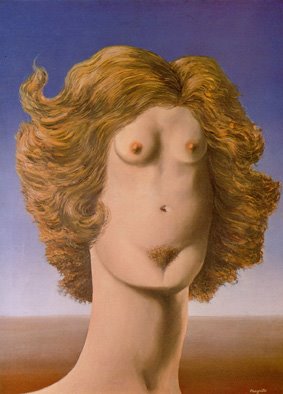
Rene Magritte - The Rape (1934)


"Everything we see hides another thing, we always want to see what is hidden by what we see."

Rene Magritte

"This book [The Order of Things] first arose out of a passage in Borges, out of the laughter that shattered, as I read the passage, all the familiar landmarks of my thought - our thought, the thought that bears the stamp of our age and our geography - breaking up all the ordered surfaces and all the planes with which we are accustomed to tame the wild profusion of existing things...This passage quotes 'a certain Chinese encyclopaedia' in which it is written that 'animals are divided into: (a) belonging to the emperor, (b) embalmed, (c) tame, (d) sucking pigs, (e) sirens, (f) fabulous, (g) stray dogs, (h) included in the present classification, (i) frenzied, (j) innumerable, (k) drawn with a very fine camelhair brush, (l) et cetera, (m) having just broken the water pitcher, (n) that from a long way off look like flies'. In the wonderment of this taxonomy, the thing that...is demonstrated as the exotic charm of another system of thought, is the limitation of our own, the stark impossibility of thinking that."

Michel Foucault

"Never lose sight of the fact that all human felicity lies in man's imagination, and that he cannot think to attain it unless he heeds all his caprices. The most fortunate of persons is he who has the most means to satisfy his vagaries."

Marquis de Sade

Monday, October 16, 2006

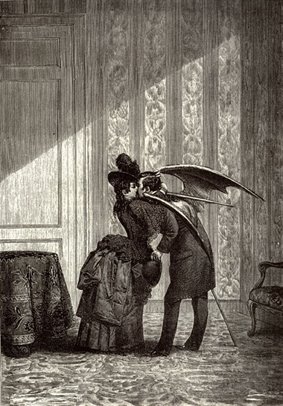
Ten Kisses (October Special)


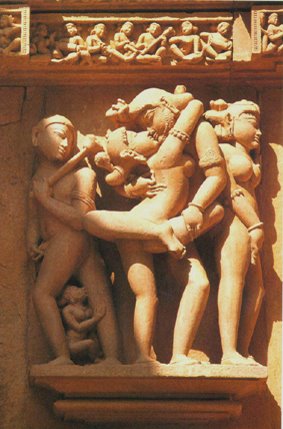
Khajuraho Temple, India (c. 9-10th C. AD)

"Women still remember the first kiss after men have forgotten the last." Remy de Gourmont


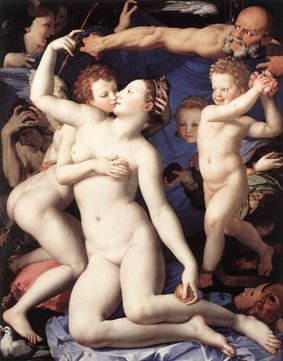
Br
onzino - Venus, Cupid and Time (1545)

"A kiss is a lovely trick designed by nature to stop speech when words become superfluous." Ingrid Bergman


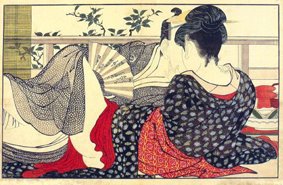
Kitagawa Utamaro
- Lovers (1788)

"A man who can drive safely while kissing a pretty girl is simply not giving the kiss the attention it deserves." Albert Einstein


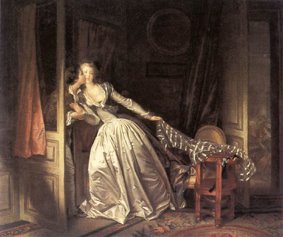
Jean Fragonard
- Stolen Kiss (c. 1788)

"That farewell kiss which resembles greeting, that last glance of love which becomes the sharpest pang of sorrow." George Eliot


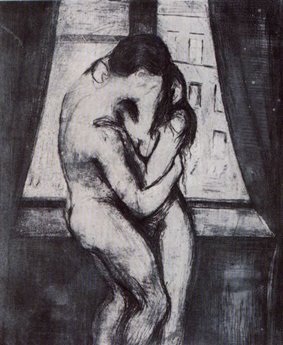
Edvard Munch
- Kiss (1895)

"May I kiss you then? On this miserable paper? I might as well open the window and kiss the night air!" Franz Kafka


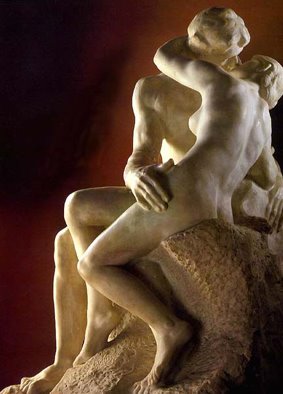
Auguste Rodin
- The Kiss (1896)

"The sound of a kiss is not so loud as that of a cannon, but its echo lasts a great deal longer." Oliver Wendell Holmes


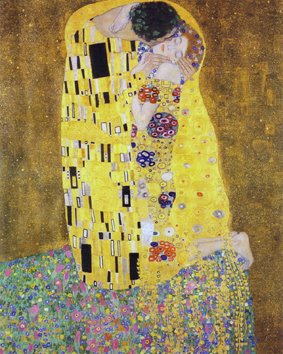
Gustav Klimt
- The Kiss (1907-8)

"Hollywood is a place where they'll pay you a thousand dollars for a kiss and fifty cents for your soul." Marilyn Monroe


Max Ernst
- Une Semaine de Bonte (1934)

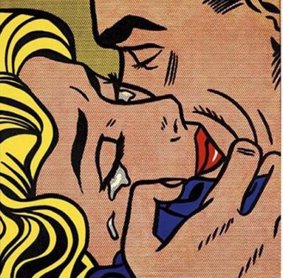
"A compliment is something like a kiss through a veil." Victor Hugo


Roy Lichtenstein
- Kiss V (1964)

"Before you find your prince, you have to kiss a lot of frogs." Anon


Amelie
- d. Jean-Pierre Jeunet (2001)


Kiss (lyrics) by Prince

U don’t have 2 be beautiful
2 turn me on
I just need your body baby
From dusk till dawn
U don’t need experience
2 turn me out
U just leave it all up 2 me
I’m gonna show u what it’s all about

U don’t have 2 be rich
2 be my girl
U don’t have 2 be cool
2 rule my world
Ain’t no particular sign I’m more compatible with
I just want your extra time and your

Kiss

U got to not talk dirty, baby
If u wanna impress me
U can’t be 2 flirty, mama
I know how 2 undress me (yeah)
I want 2 be your fantasy
Maybe u could be mine
U just leave it all up to me
We could have a good time

U don’t have 2 be rich
2 be my girl
U don’t have 2 be cool
2 rule my world
Ain’t no particular sign I’m more compatible with
I just want your extra time and your

Kiss

Yes
I think I wanna dance
Gotta, gotta
Little girl wendy’s parade
Gotta, gotta, gotta

Women not girls rule my world
I said they rule my world
Act your age, mama (not your shoe size)
Not your shoe size
Maybe we could do the twirl
U don’t have 2 watch dynasty
2 have an attitude
U just leave it all up 2 me
My love will be your food
Yeah

U don’t have 2 be rich
2 be my girl
U don’t have 2 be cool
2 rule my world
Ain’t no particular sign I’m more compatible with
I just want your extra time and your

Kiss

Flesh And Fantasy: Part One


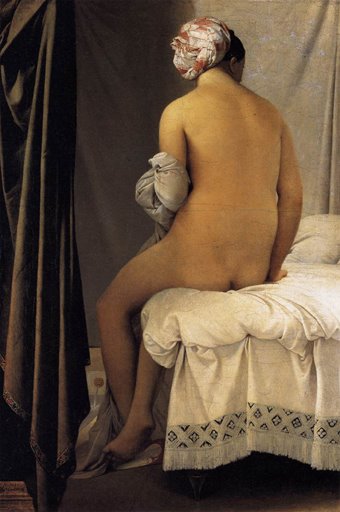
Jean-Auguste-Dominique Ingres (1780-1867) - The Bather, 1808


Language is a skin: I rub my language against the other. It is as if I had words instead of fingers, or fingers at the tip of my words. My language trembles with desire.

Roland Barthes

Nakedness reveals itself. Nudity is placed on display. The nude is condemned to never being naked. Nudity is a form of dress.

John Berger

Just because we're sisters under the skin doesn't mean we've got much in common.

Angela Carter


Resources

Ingres' Character and Personality (Grove Art Online):

Ingres was the staunchest, most conservative defender of the classical tradition, preaching an inflexible, if sometimes contradictory, doctrine of ideal beauty and the absolute supremacy of line and pure form over colour and emotion. He described himself as generally affable but with a ‘white hot’ temper if he felt himself wronged. His personality, like his art, was marked by a preference for the order of a familiar universe. He adjusted slowly to changes in daily habits and remained the worst sort of provincial traveller, comparing everything that was new to him unfavourably with the home equivalent.

According to Charles Blanc, Ingres’s friend and biographer, ‘Here was a man for whom invention was painful, but who bent his faults by a prodigious love of the beautiful’. In times of stress, Ingres was likely to react with a whole variety of physical symptoms, for example boils and atrocious headaches during the last few months of 1833, while he was working on the Apotheosis of Homer. There were times, however, when the pleasures of work were sweeter than ever before: ‘Every day I am shut away in my studio from morning to night. I am love struck by painting, I don’t possess it, it possesses me’. He was not at all the 19th-century bohemian artist; he loved every bourgeois comfort and expected his wife to look after his domestic needs.

In a letter of 7 July 1862 to Hippolyte Fockedey Victor Mettez described ‘le Père Ingres’ as ‘choleric, impatient, obstinate, good, naive, righteous, lazy . . . by moments eloquent and sublime...an incredible mélange’. This ‘mélange’ was echoed in an intimate sketch of Ingres by the composer Charles Gounod: ‘He had an enthusiasm which sometimes approached eloquence. He had the tenderness of a child and the indignations of an apostle. He was naive and sensitive. He was sincerely humble before the great masters, but fiercely proud of his own accomplishments’ (Mémoires d’un artiste, Paris, 1896).

Ingres’s passions for music (Gluck, Haydn, Mozart and Beethoven), for literature (Plutarch, Virgil, Homer, Shakespeare, Dante and Vasari) and the visual arts (Raphael and Michelangelo) were deep and lifelong. His friends were friends for life, unless they crossed him, and nothing pleased him more than his favourite music in the company of a select circle of friends. As a student, he was seen as too serious, intolerant of the usual studio antics; as a teacher, although he often acted as a father figure to his favourite students, he brooked no opposition: ‘Discussion was, unfortunately, not possible with M. Ingres’. And M. Ingres he remained, even to his family and closest friends.


More images by this artist can be accessed at:

http://www.wga.hu/index1.html


Reading:

Ways of Seeing - John Berger

The Female Nude - Linda Nead

Visual and Other Pleasures - Laura Mulvey
Sunday, October 15, 2006

This Is Not A Paint(h)ing: Part Three


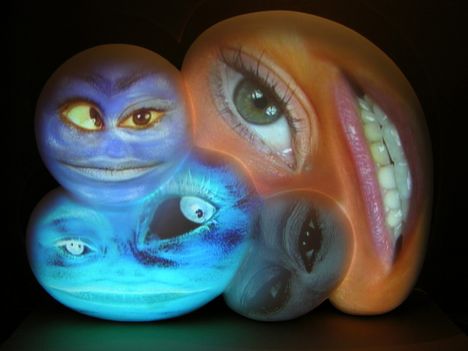
Tony Oursler - Clump (2006)


"Outside and inside form a dialectic of division, the obvious geometry of which blinds us as soon as we bring it into play in metaphorical domains. It has the sharpness of the dialectics of yes and no, which decides everything. Unless one is careful, it is made into a basis of images that govern all thoughts of positive and negative. Logicians draw circles that overlap or exclude each other, and all their rules become immediately clear. Philosophers, when confronted with outside and inside, think in terms of being and non-being. Thus profound metaphysics is rooted in an implicit geometry which - whether we will or no - confers spatiality upon thought; if a metaphysician could not draw, what would he think? Open and closed, for him, are thoughts. They are metaphors that he attaches to everything, even to his systems. In a lecture given by Jean Hyppolite on the subtle structure of denegation (which is quite different from the simple structure of negation) Hyppolite spoke of a "first myth of inside and outside". And he added: "you feel the full significance of this myth of outside and inside in alienation, which is founded on these two terms. Beyond what is expressed in their formal opposition becomes tinged with aggressivity. Formal opposition is incapable of remaining calm. It is obsessed by the myth. But this action of the myth throughout the immense domain of imagination and expression should not be studied by attributing it the false light of geometrical intuitions.

"This side" and "beyond" are faint repetitions of the dialectics of inside and outside: everything takes form, even infinity. We seek to determine being and, in so doing, transcend all situations, to give a situation of all situations. Man's being is confronted with the world's being, as though primitivity could be easily arrived at. The dialectics of here and there has been promoted to the rank of an absolutism according to which these unfortunate adverbs of place are endowed with unsupervised powers of ontological determination. Many metaphysical systems would need mapping. But in philosophy, all short-cuts are costly, and philosophical knowledge cannot advance from schematised experiments."

From The Poetics of Space by Gaston Bachelard


Further resources:

Tony Oursler Online

Tony Oursler on artnet

Tony Oursler: Projecting the Psyche - Pravin Sathe

Hallucinating with the Ears - Andrew Clifford

NGA (New Aquisitions) - Incubator (Tony Oursler, 2003)

Tony Oursler: The Presence Project - Gabriella Giannachi

Saturday, October 14, 2006

This Is Not A Paint(h)ing: Part Two


Hiraki Sawa - (still from) Going Places Sitting Down (2004)


"Psychologists - and more especially philosophers - pay little attention to the play of miniature frequently introduced into fairytales. In the eyes of the psychologist, the writer is merely amusing himself when he creates houses that can be set on a pea. But this is a basic absurdity that places the tale on a level with the merest fantasy. And fantasy precludes the writer from entering, really, into the domain of the fantastic. Indeed he himself, when he develops his facile inventions, often quite ponderously, would appear not to believe in a psychological reality that corresponds to these miniature features. He lacks that little particle of dream which could be handed on from writer to reader. To make others believe, we must believe ourselves. Is it worthwhile, then, for a philosopher to raise a phenomenological problem with regard to these literary "miniatures", these objects that are so easily made smaller through literary means? Is it possible for the conscious - of both writer and reader - to play a sincere role in the very origin of images of this kind?

Yet we are obliged to grant these images a certain objectivity, from the mere fact that they both attract and interest many dreamers. One might say that these houses in miniature are false objects that possess a true psychological objectivity. Here the process of imagination is typical, and poses a problem that must be distinguished from the general problem of geometrical similarities. The geometrician sees exactly the same thing in two similar figures, drawn to different scales. The plan of a house drawn on a reduced scale implies none of the problems that are inherent to a philosophy of the imagination. There is even no need to consider it from the general standpoint of representation, although it would be important, from this standpoint, to study the phenomenology of similarity. Our study should be specified as belonging definitely under the imagination.

Everything will be clear, for instance, if, in order to enter into the domain where we imagine, we are forced to cross the threshold of absurdity, as in the case of [Bean Treasure] , Charles Nodier's hero, who gets into a fairy's coach the size of a bean. In fact, he gets into it with six "litrons" of beans on his shoulder. There is thus a contradiction in numbers as well as in the size of the space involved. Six thousand beans fit into one. And the same thing is true when Michael - who is oversize - finds himself, to his great surprise, in the house of the [Beggar Fairy], which is hidden under a tuft of grass. But he feels at home there, and settles down. Happy at being in a small place, he realises an experience of topohilia; that is, once inside the miniature house, he sees its vast number of rooms; from the interior he discovers interior beauty. Here we have an inversion of perspective, which is either fleeting or captivating, according to the talent of the narrator, or the reader's capacity for dream. Nodier, who was often too eager to be "agreeable", and too much amused to give full reign to his imagination, allows certain badly camouflaged rationalisations to subsist. In order to explain psychologically this entry into the tiny house, he recalls the little cardboard houses that children play with. In other words, the tiny things we imagine simply take us back to childhood, to familiarity with toys and the reality of toys.

But the imagination deserves better than that. In point of fact, imagination in miniature is natural imagination which appears at all ages in the daydreams of born dreamers. Indeed, the element of amusement must be removed, if we are to find its true psychological roots.

. . .

Representation becomes nothing but a body of expressions with which to communicate our own images to others. In line with a philosophy that accepts the imagination as a basic faculty, one could say, in the manner of Schopenhauer: "The world is my imagination." The cleverer I am at miniaturising the world, the better I possess it. But in doing this, it must be understood that values become condensed and enriched in miniature. Platonic dialectics of large and small do not suffice for us to become cognizant of the dynamic virtues of miniature thinking. One must go beyond logic in order to experience what is large in what is small."

From The Poetics of Space by Gaston Bachelard


Sawa's work is currently on display at the National Gallery of Victoria until 3rd December in the New Media Gallery, Level 3, and admission is free.


Other resources:

Hiraki Sawa - Gregory Volk (UCLA Hammer Museum)

James Cohan Gallery

Artfacts.Net

Hiraki Sawa - (ed.) Katherine Wood

Friday, October 13, 2006

This Is Not A Paint(h)ing: Part One


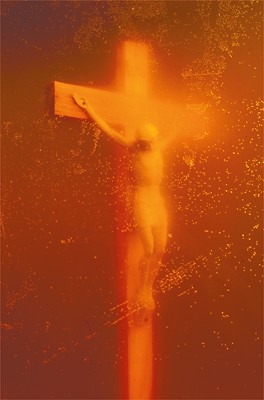
Andres Serrano - Piss Christ (1987)


"A philosopher of the imagination, therefore, should follow the poet to the ultimate extremity of his images, without ever reducing this extremism, which is the specific phenomenon of the poetic impulse. In a letter to Clara Rilke, Rilke wrote: 'Works of art always spring from those who have faced the danger, gone to the very end of an experience, to the point beyond which no human being can go. The further one dares to go, the more decent, the more personal, the more unique a life becomes.' But is it necessary to go and look for "danger" other than the danger of writing, of expressing oneself? Doesn't the poet put language in danger? Hasn't the fact that, for so long, poetry has been the echo of heartache, given it a pure dramatic tonality? When we really live a poetic image, we learn to know, in one of its tiny fibres, a becoming of being that is an awareness of the being's inner disturbance. Here being is so sensitive that it is upset by a word. In the same manner, Rilke adds: 'This sort of derangement, which is peculiar to us, must go into our work.'

. . .

If, through poetry, we restore to the activity of language its free field of expression, we are obliged to supervise the use of fossilized metaphors."

From The Poetics of Space by Gaston Bachelard


Two of the many articles spawned by the above photograph:

Sacrifice, Piss Christ and Liberal Excess: Part 1 - Damien Casey (Arts and Opinion, 2004)

Sacrifice, Piss Christ and Liberal Excess: Part 2 (The Rebuttal) - Michael Casey, Anthony Fisher and Haydan Ramsey (Arts and Opinion, 2004)


Reading:

Visions of Excess: Selected Writings, 1927-1939 (ed. Allan Stoekl) - Georges Bataille

The Three Ecologies - Felix Guatarri

Chaosmosis: An Ethico-Aesthetic Paradigm - Felix Guatarri

The Deleuze Reader (ed. Constantin V. Boundas) - Gilles Deleuze

Thursday, October 12, 2006

The Last Days Of The "Idiot Box"?


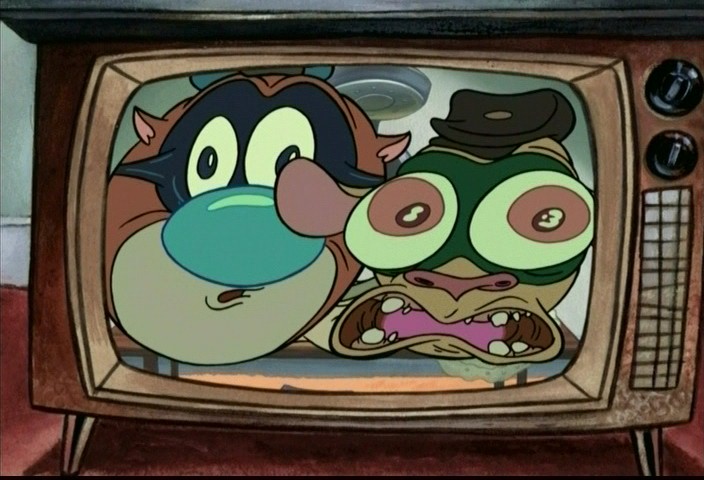
Ren and Stimpy - (from the episode) Altruists!


"The argument, then, is that television produces the conditions of an ironic knowingness, at least as a possibility...[which] may offer a way of thinking subjectivity free of subjection...Most of all, it opens identity to diversity, and escapes the notion of cultural identity as a fixed volume...But if it does all this, it does not do it in that utopia of guaranteed resistance which assumes the progressiveness of naturally oppositional readers who will get it right in the end. It does, rather, with terms hung in suspension. . .tactics of empowerment, games of subordination with neither term fixed in advance."

From Playing at Being American:Game and Tactics by John Caughie (1990)

Tuesday, October 10, 2006

The Skin Of The Screen


Gloria Swanson (as Norma Desmond) in Sunset Boulevard (1950) - d. Billy Wilder


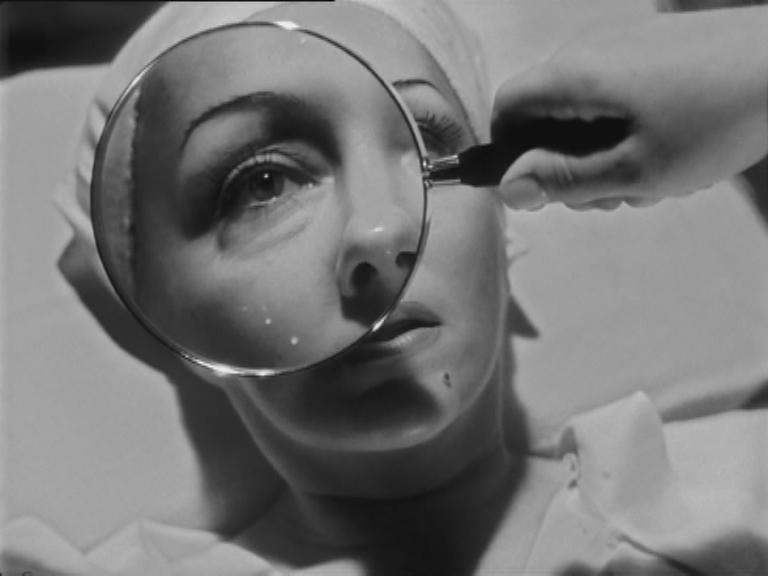
"What does it mean to think of glamour as a mask? It means apprehending the body beautiful - and especially a beautiful face - as a special, heightened metaphor of the human being who possesses it. Edgar Morin in his 1957 book The Stars once grumbled over the historical tendency that has led us to invest so much in the face - the eyes are the window of the soul, and all that - a tendency given absolute aesthetic form in our rapture before the screen close-up of a gorgeous movie star. Morin's worry is valid: something of the full, earthy body - and that body in motion - is surely lost in those ethereally frozen, twilight moments of the supremely beautiful human face, images wrought from movies into that even more impossibly perfect art of the Hollywood still photographer's glamour portrait.

But there is another way to dream in front of images of glamour. Here's an example: the generation of surrealists who excavated the imagery of popular culture with such passion in the 1950s was also deeply into glamour. Inspired by the aphorisms of Malcolm de Chazal - a visionary philosopher of the human face who saw all the forces and systems of the natural world reflected there - these surrealists grasped beauty not as an objective, frozen commodity, but as a private revelation, an amorous fantasy that must endlessly be recreated in words and homages, dreamed out aloud. The reveries of the surrealists may strike us as rather perverse inversions of conventional beauty codes - Andre Breton, for instance, was given to extolling his wife's 'sexual organs of seaweed and old sweets' - but these reveries were more like mad hallucinations. It is as if everyone, on screen or off, had been touched by the dreamlike magic made possible by the luminous magnifications of the camera lens."

From Glamour: The Confession Of A Mask by Adrian Martin

Monday, October 09, 2006

Portrait Of The Artist As An Ageing Imbecile


Andy Warhol - Self Portrait (1986)


"Stupidity is contemplated: sight penetrates its domain and becomes fascinated; it carries one gently along and its action is mimed in the abandonment of oneself; we support ourselves upon its amorphous fluidity; we await the first leap of an imperceptible difference, and blankly, without fever, we watch to see the glimmer of light return. Error demands rejection - we can erase it; we accept stupidity - we see it, we repeat it, and softly, we call for total immersion.

This is the greatness of Warhol with his canned foods, senseless accidents, and his series of advertising smiles."

From Language, Counter-Memory, Practice by Michel Foucault

Sunday, October 08, 2006

Furniture Of The Mind


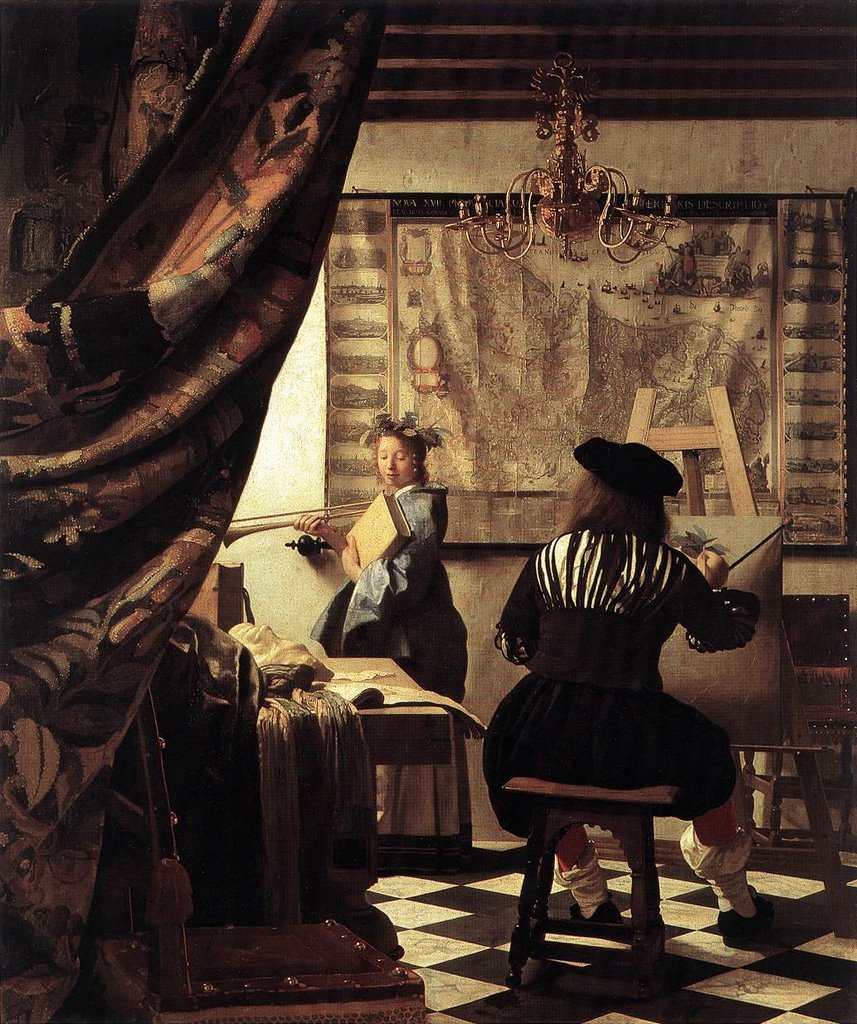
Jan Vermeer van Delft - The Art of Painting (1665-67)

Other works by this artist can be accessed at: http://www.wga.hu/index1.html

"The things of the world are not simply neutral objects which stand before us for our contemplation. Each one of them symbolises or recalls a particular way of behaving, provoking in us reactions which are either favourable or unfavourable. This is why people's tastes, character, and the attitude they adopt in the world and to particular things can be deciphered from the objects with which they choose to surround themselves, their preferences for certain colours or the places where they like to go for walks...The objects which haunt our dreams are meaningful in the same way. Our relationship with things is not a distant one: each speaks to our body and to the way we live. They are clothed in human characteristics (whether docile, soft, hostile or resistant) and conversely they dwell within us as emblems of forms of life we either love or hate. Humanity is invested in the things of the world and these are invested in it. To use the language of psychoanalysis, things are complexes. This is what Cezanne meant when he spoke of the particular 'halo' of things which it is the task of painting to capture."

From The World of Perception by Maurice Merleau-Ponty

Saturday, October 07, 2006

Make 'Em Smile


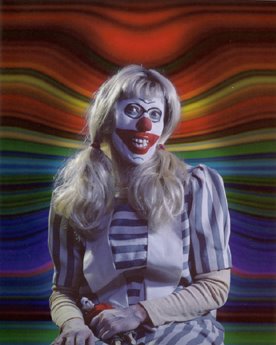
Cindy Sherman - Untitled # 412 (2003)


"In her most recent work,...[Cindy] Sherman has created a group of images of clowns that were initially inspired by an article of clothing - pyjamas with fur-like buttons - which she had purchased at a yard sale a decade earlier. Sherman has commented that she wanted to make new characters that were 'intense, with a nasty side or an ugly side, but also with a real pathos about [them] - and [clowns] have an underlying sense of sadness while they're trying to cheer people up. Clowns are sad, but they're also psychotically, hysterically happy.' In light of Sherman's career-long interest in artifice and masquerade, this subject mirrors her self- transformation through costumes, make-up, wigs and prosthetics. What is strikingly similar between Sherman's creative process and the way clowns create personas is the hermetic approach they take: like the artist in her work, 'a clown is their [sic] own writer, director, costumer, make-up artist, and prop-man.'"

From Cindy Sherman - (exhibition catalogue with text) by Rochelle Steiner and Lorrie Moore

Friday, October 06, 2006

The Truth Is Rarely Pure And Never Simple


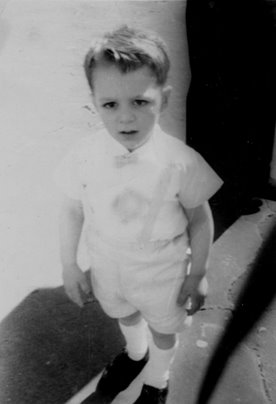
The Boy I Was (and hope to be again some day)


"As children, we have all suspected it: perhaps we are all, moving strangely beneath the sky, victims of a trap, a joke whose secret we will one day know. This reaction is certainly infantile and we turn away from it, living in a world imposed on us as though it were "perfectly natural", quite different from the one that used to exasperate us. As children, we did not know if we were going to laugh or cry but, as adults, we "possess" this world, we make endless use of it, it is made of intelligible and utilisable objects. It is made of earth, stone, wood, plants, animals. We work the earth, we build houses, we eat bread and wine. We have forgotten, out of habit, our childish apprehensions. In a word, we have ceased to mistrust ourselves.

Only a few of us, amid the great fabrications of society, hang on to our really childish reactions, still wonder naively what we are doing on the earth and what sort of joke is being played on us. We want to decipher skies and paintings, go behind these starry backgrounds or these painted canvases and, like kids trying to find a gap in a fence, try to look through the cracks in the world."

From The Cruel Practice of Art by Georges Bataille (1949)

Thursday, October 05, 2006

The Incarnate Tartuffery Of Morals


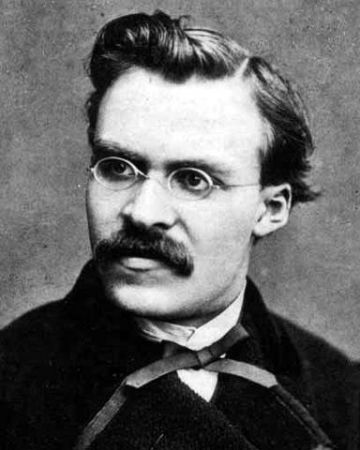
Friedrich Wilhelm Nietzsche (1844-1900)


"All psychology has hitherto remained anchored to moral prejudices and timidities: it has not ventured into the depths. To conceive it as morphology and the development-theory of the will to power, as I conceive it - has never yet so much as entered the mind of anyone else: in so far as it is permissible to see in what has hitherto been written a symptom of what has hitherto been kept silent. The power of moral prejudices has penetrated deep into the most spiritual world, which apparently is the coldest and most free of presuppositions - and, as goes without saying, has there acted in a harmful, inhibiting, blinding, distorting fashion. A genuine physio-psychology has to struggle with unconscious resistances in the heart of the investigator, it has 'the heart' against it: even a theory of the mutual dependence of the 'good' and the 'wicked' impulses causes, as a more refined immorality, revulsion to a conscience still strong and hearty - and even more a theory of the derivation of all good impulses from wicked ones. Supposing, however, that someone goes so far as to regard the emotions of hatred, envy, covetousness, and lust for domination as life-conditioning emotions, as something which must be fundamentally and essentially be present in the total economy of life, consequently must be heightened further if life is to heightened further - he suffers from such a judgement as from seasickness. And yet even this hypothesis is far from being the strangest and most painful in this tremendous, still almost unexplored realm of dangerous knowledge - and there are in fact a hundred good reasons why everybody should keep away from it who - can! On the other hand: if your ship has driven into these seas, very well! Now clench your teeth! Keep your eyes open! Keep a firm hand on the helm! - We sail straight over morality and past it, we flatten, we crush perhaps what is left of our own morality by venturing to voyage thither - but what do we matter! Never yet has a deeper world of insight revealed itself to daring travellers and adventurers..."

From Beyond Good and Evil by Friedrich Nietzsche

Wednesday, October 04, 2006

Can You Say What I'm Seeing?


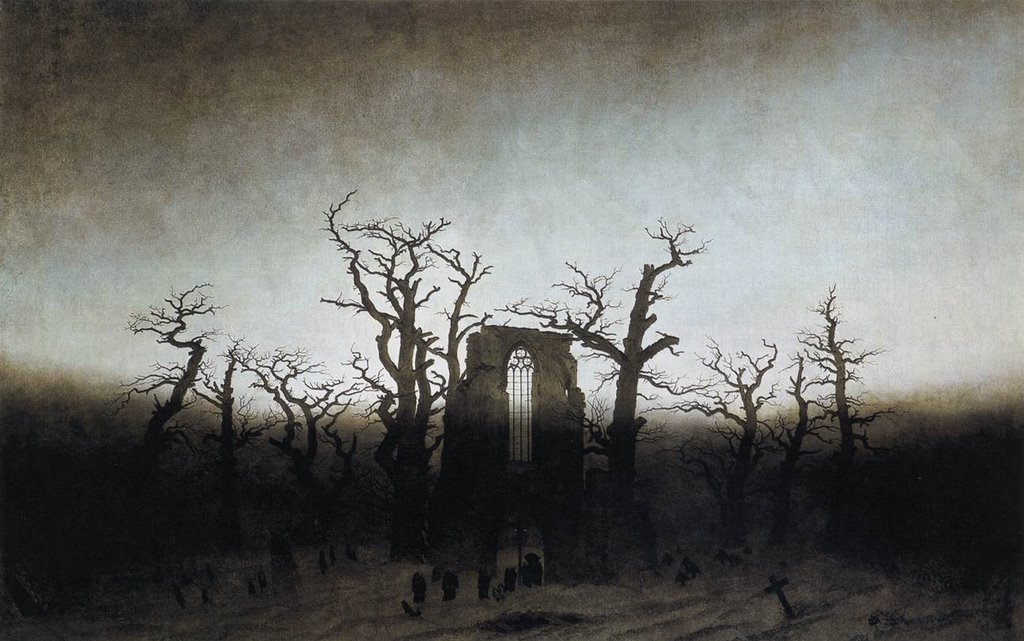
Caspar David Friedrich - The Abbey in the Oakwood (1809-10)

This and many other images by Friedrich can be accessed at: http://www.wga.hu/index1.html


'Ideas are refined and multiplied in the commerce of minds. In their splendour, images effect a very simple communion of souls.'

Gaston Bachelard